

| Key Takeaway:
Hard water hasn’t been proven to harm pets, and softened water adds only a small amount of sodium (or potassium), but it isn’t right for every animal. Ask your veterinarian first if your pet has a heart or kidney condition or eats a prescribed diet, and keep fresh water available at all times in Arizona’s heat. |
Quick answer: Whether softened water suits your pet depends on the pet. A water softener removes hardness minerals like calcium and magnesium and replaces them with a small amount of sodium (or potassium). Many households never think twice about it, but if your pet has a heart or kidney condition, eats a sodium-restricted or prescription diet, or is very small, ask your veterinarian before switching water. If you want options, a separate drinking-water tap gives your family and your pets a choice.
In Arizona, pets and people share the same tap water, and that water is notoriously hard and treated with chlorine. It’s natural to wonder what that means for the animal drinking from the bowl on your kitchen floor, especially when you’re thinking about adding a water softener.
What’s in Arizona Tap Water That Pet Owners Ask About?
Two things come up most often:
- Hardness minerals. Arizona’s water is rich in calcium and magnesium. According to Aquatell’s measurements, there isn’t a single Arizona city with soft water. Learn more in our guide to hard water in Arizona.
- Chlorine. Water providers add chlorine to keep water disinfected on its way to your tap, which is why some homes notice a “pool-like” smell or taste. Read more about chlorine in Arizona tap water.
Does Hard Water Hurt Pets?
This is a common worry, but the evidence is thin. A veterinarian-reviewed article from Catster notes that the idea that hard water causes urinary crystals or stones in cats traces back to a 2016 pet-insurance report, and that it found no peer-reviewed studies backing the claim. Factors like breed, sex, age, diet, and health conditions are discussed as contributors instead, and the exact causes aren’t fully known.
So we won’t tell you hard water is harming your pet, and we won’t tell you a softener will prevent a health problem. If your pet has had urinary issues, your veterinarian is the right person to guide diet and water decisions.
Where hard water does leave a clear mark is on equipment. Mineral scale can build up in pet water fountains and on bowls, which makes them harder to keep clean.
Is Softened Water Safe for Pets?
A salt-based softener uses ion exchange to swap hardness minerals for sodium (or potassium, if your system uses potassium). That means softened water contains slightly more sodium than the same water before softening.
For many healthy pets, that’s not a concern. But it can matter for some animals, so it’s worth asking your veterinarian first if your pet:
- Has a heart or kidney condition
- Eats a prescription or sodium-restricted diet
- Is a very small animal, a puppy or kitten, or a senior pet
- Has been told to watch salt intake for any reason
If your vet recommends unsoftened water for drinking, it’s simple to plan for. Many softener systems can be set up so one tap, such as the kitchen sink or an outdoor spigot, stays unsoftened. Planning where those lines go is easiest at installation, and if you’re building, during construction (see our post on the soft-water loop).
What About Reverse Osmosis or Filtered Water for Pets?
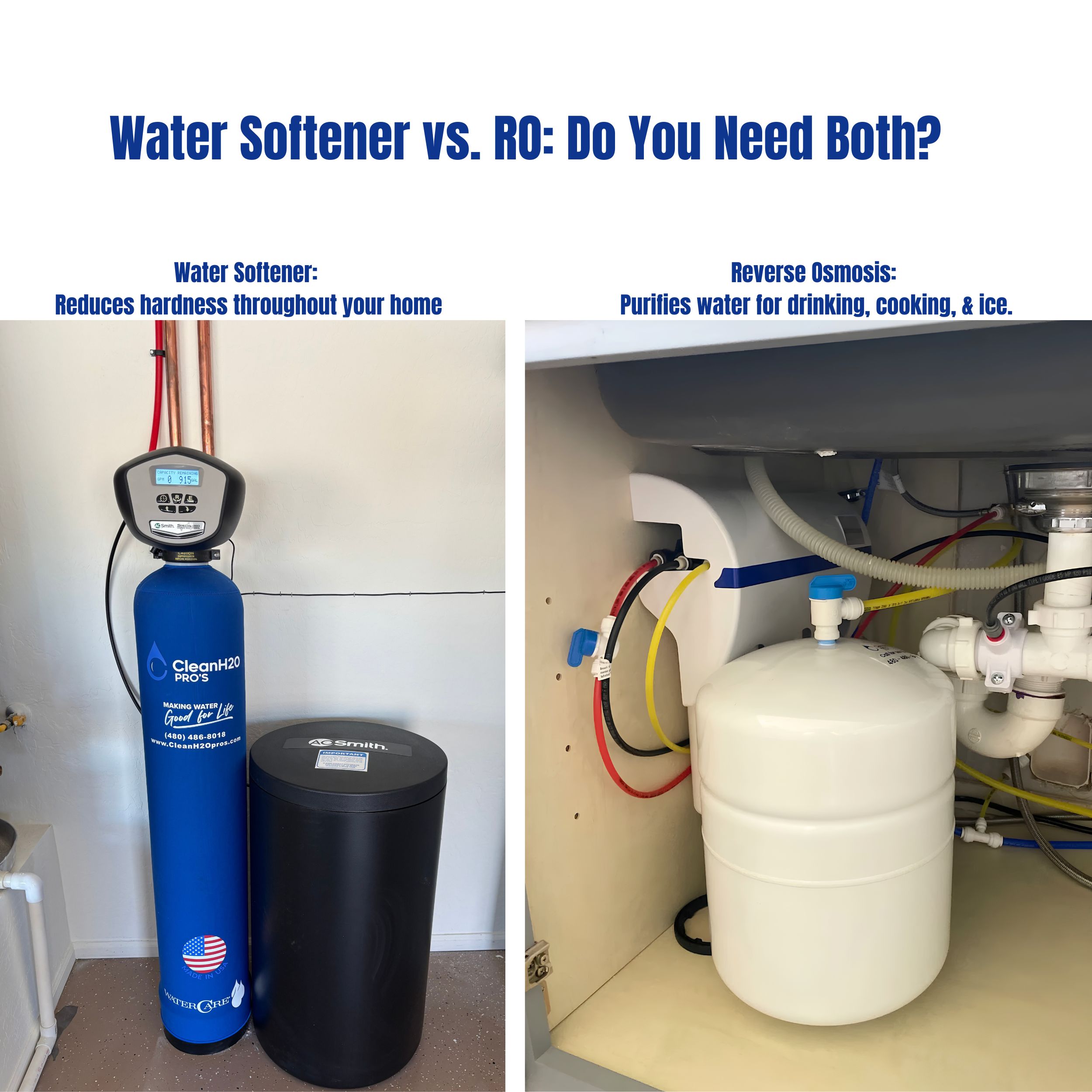
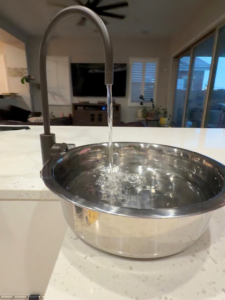
A water softener and a reverse osmosis (RO) system do different jobs. A softener treats hardness for your home, while an RO system treats drinking and cooking water at one tap, usually the kitchen sink. Carbon filtration can help with chlorine-related taste and odor.
Some pet owners fill bowls from their drinking-water tap so pets and people drink the same water. Whether RO or filtered water is the right choice for your pet is a question for your veterinarian, since it depends on your animal’s health and diet. For a full comparison, read Water Softener vs. RO in Arizona.
Keeping Pets Hydrated in Arizona’s Heat
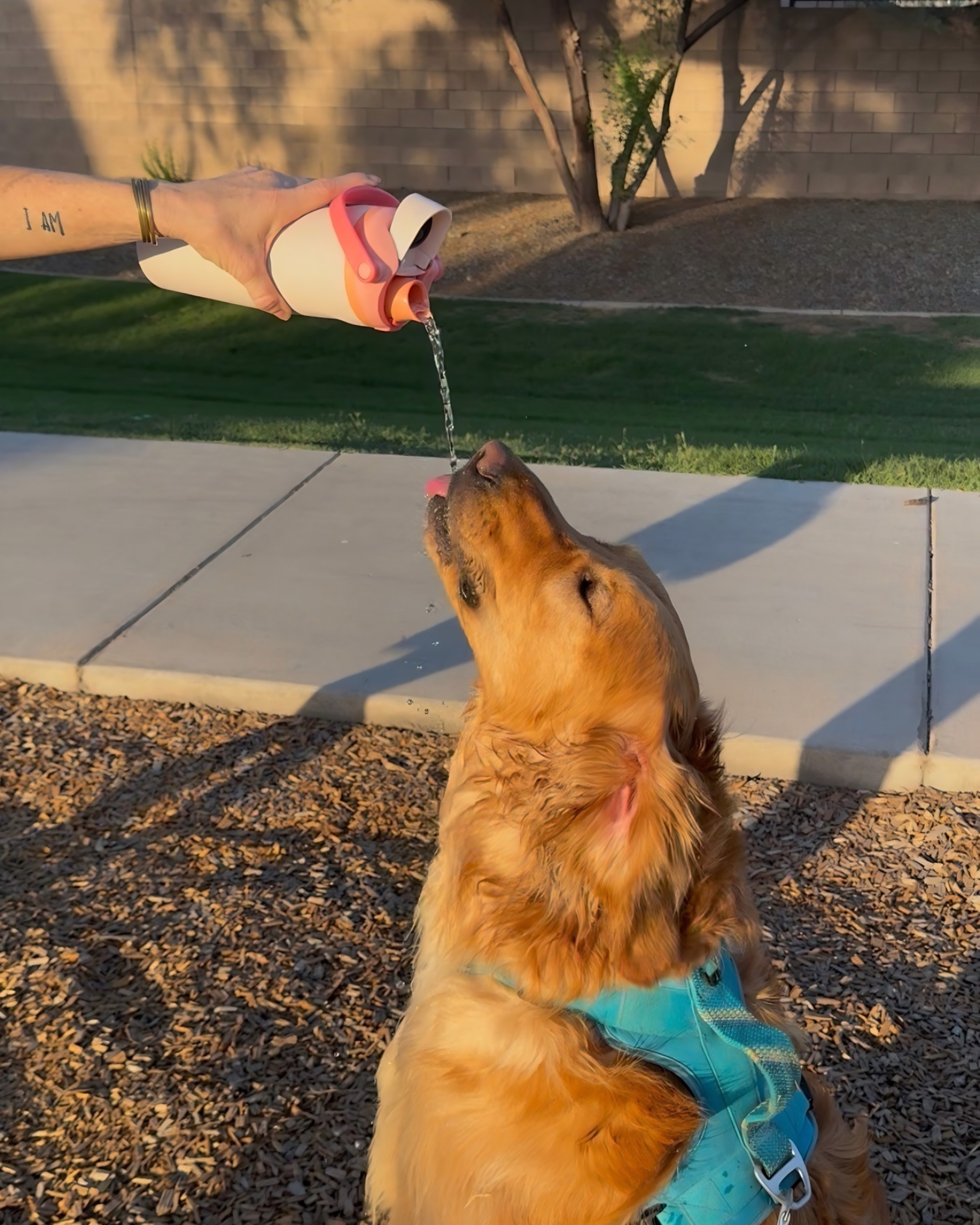
In Arizona, the bigger water question for pets is often simply: is there always enough cool, fresh water within reach? Maricopa County’s pet heat safety guidance advises consistent access to cool drinking water, limiting outdoor time to cooler mornings and evenings, and never leaving a pet in a hot car.
The county also lists signs of heat illness, including loud or rapid panting, abnormal gum color, weakness, vomiting or diarrhea, and collapse. If you see these signs, call your veterinarian or an emergency vet right away.
Tips for Pet Water Bowls and Fountains
- Refresh water daily, and more often in summer.
- Wash bowls regularly. Hard water can leave white mineral film that makes cleaning harder.
- Descale pet fountains following the manufacturer’s instructions, since mineral buildup can affect how they run.
- Offer more than one bowl, including a shaded spot outdoors.
- Watch for changes. If your pet suddenly drinks much more or much less than usual, tell your veterinarian.
Aquariums and Other Pets
Fish, reptiles, and other specialty pets have their own water needs. Softened water and RO water have different mineral content than tap water, and that can matter for aquariums and some animals. Check with your aquarium store or an exotic-pet veterinarian before using treated water for these pets.
Frequently Asked Questions
Is softened water safe for dogs and cats?
It depends on the pet. Softened water contains a small amount of added sodium or potassium. Ask your veterinarian first if your pet has a heart or kidney condition, eats a prescription or sodium-restricted diet, or is very small, very young, or a senior.
Does hard water cause urinary problems in pets?
A link hasn’t been proven. A veterinarian-reviewed Catster article notes that the idea comes from a 2016 pet-insurance report and that no peer-reviewed studies were found. If your pet has had urinary issues, talk to your veterinarian.
Can I give my pet unsoftened water if I have a water softener?
Often, yes. Many systems can be set up to leave one tap, such as the kitchen sink or an outdoor spigot, unsoftened or to provide separate drinking water with an RO system. An installer can check what’s possible in your home.
Should pets drink reverse osmosis or filtered water?
Some owners share their drinking-water tap with their pets. Whether it’s the right choice for your animal is a question for your veterinarian.
How can I keep my pet hydrated in the Arizona summer?
Provide consistent access to cool, fresh water, limit outdoor time to cooler mornings and evenings, and never leave pets in a hot car. If you notice signs of heat illness, call your veterinarian right away.
Find Out What’s in Your Water
Every home’s water is different. If you’re wondering what’s in the water your family and pets drink every day, we can help you understand it.
Schedule a free, no-obligation in-home water test with Clean H2O PRO'S. We’ll review your water’s hardness, test your drinking water, talk through what you’re noticing at home, and explain treatment options that fit your family, including how to plan for your pets.
Book Your Free Water Test → or call 480-486-8018.
This article is general information about household water, not veterinary advice. Talk to your veterinarian about your pet’s health, diet, and water.
Sources
- Maricopa County: Pet Heat Safety Tips
- Catster: Can Hard Water Cause Urinary Crystals in Cats? (reviewed by Lauren Demos, DVM)
- Aquatell: Water Hardness in Arizona