

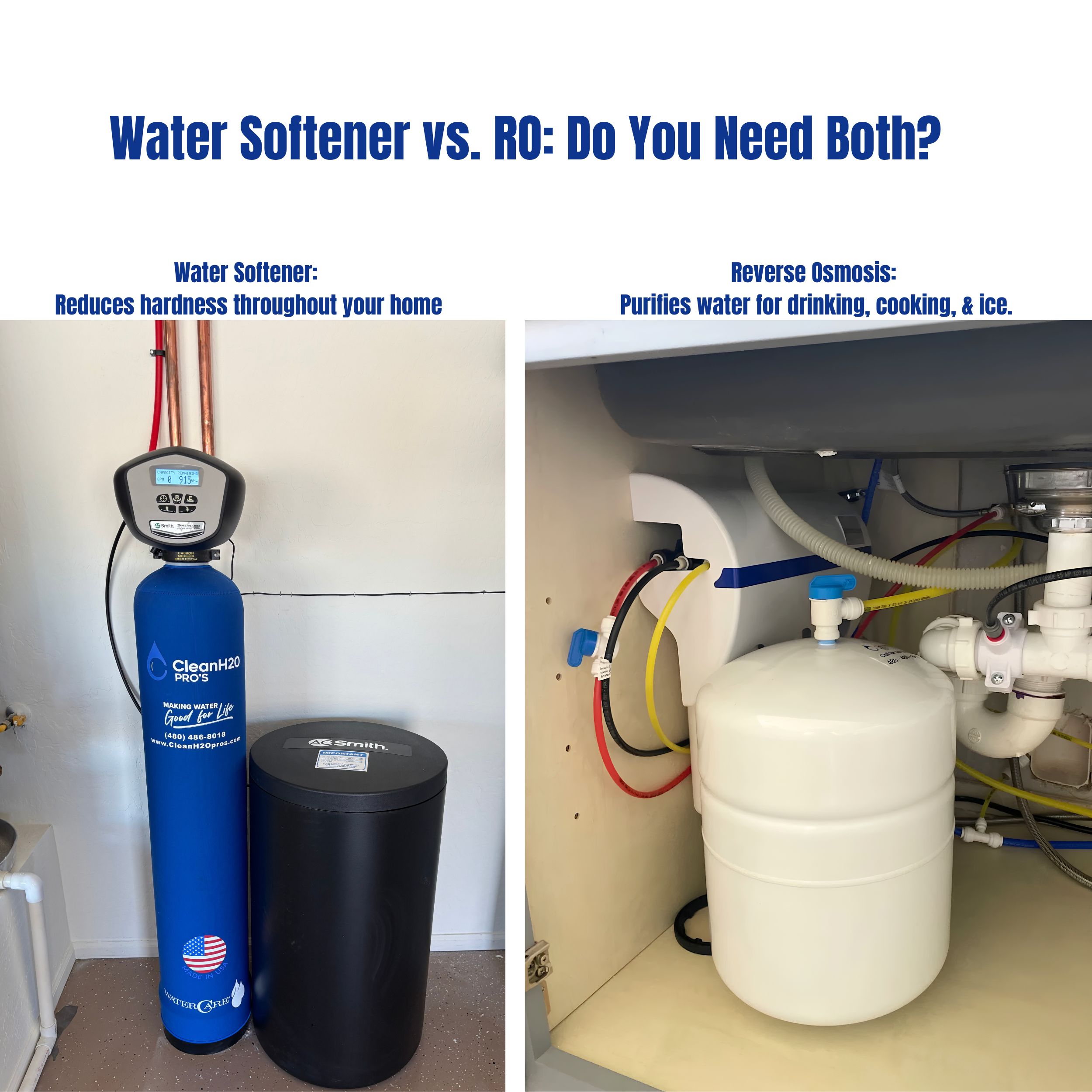
| Key Takeaway:
A water softener treats hardness for the whole house, while an RO system treats drinking and cooking water at one tap. One doesn’t replace the other, and whether you need both depends on your water test results and what you want to improve. |
Quick answer: A water softener and a reverse osmosis (RO) system do different jobs, so one does not replace the other. A softener reduces the hardness minerals that cause scale and soap buildup throughout your home. An RO system reduces dissolved substances in the water you drink and cook with. Whether you need both depends on your water test results, your plumbing, and what you want to improve.
In Arizona, where hard water is the rule rather than the exception, many homeowners end up asking this exact question. A water softener tackles the scale on your faucets, shower doors, and appliances. An RO system tackles the water in your glass. If you want to reduce hard water problems throughout your home and improve your drinking water, you may benefit from both.
What Is the Difference Between a Water Softener and Reverse Osmosis?
A water softener primarily treats water hardness. A typical residential RO system treats drinking water at a specific location, usually the kitchen sink.
Think about where you notice the problem. Buildup around your showerhead and water that tastes unpleasant are different concerns, and they may require different treatment.
| Feature | Water softener | Reverse osmosis (RO) system |
|---|---|---|
| Main purpose | Reduce water hardness | Reduce dissolved substances in drinking water |
| How it works | Exchanges calcium and magnesium for sodium or potassium | Pushes water through a semipermeable membrane |
| Typical location | Home’s incoming water line | Under the kitchen sink |
| Common uses | Bathing, laundry, cleaning, and reducing scale | Drinking, cooking, making beverages, and ice |
| Does it replace the other? | No. It does not provide the same treatment as RO. | No. A typical kitchen RO does not soften water throughout the home. |
The EPA and CDC both describe softening and reverse osmosis as distinct treatment processes (see Sources below).
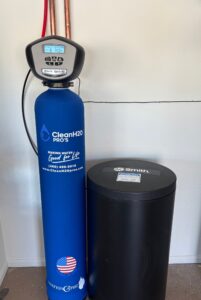
What Does a Water Softener Do?
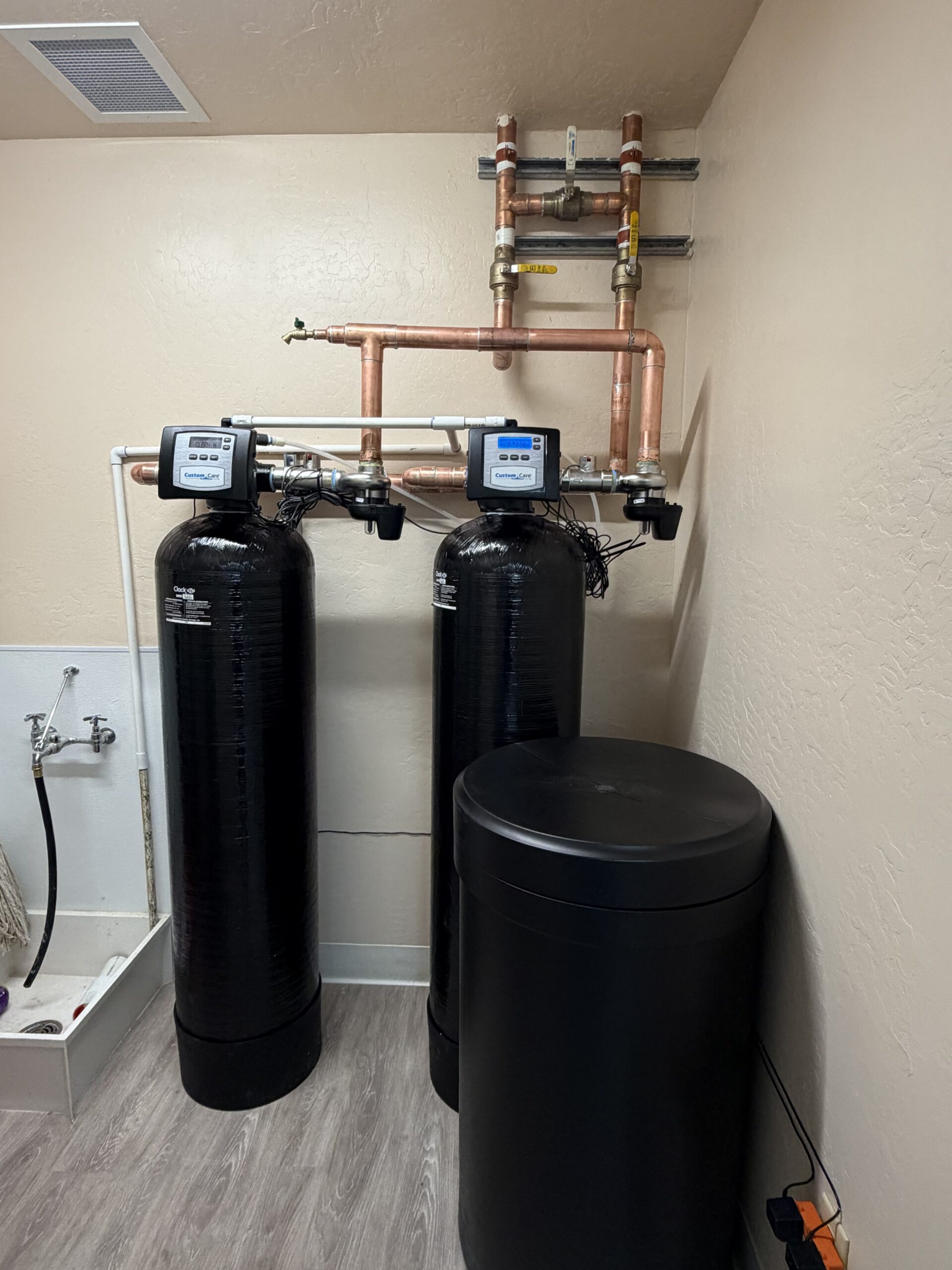
A water softener reduces hard minerals, typically calcium and magnesium, the minerals responsible for water hardness. A conventional salt-based softener uses ion exchange to replace those minerals with sodium or potassium.
Hard water can show up in everyday routines as:
- Mineral buildup on faucets and showerheads
- Scale in water-using equipment
- Soap that does not lather easily
- More effort spent cleaning mineral deposits
Softening helps address these hardness-related problems. However, it does not remove every substance in your water, and it should not be treated as a complete drinking water filtration system.
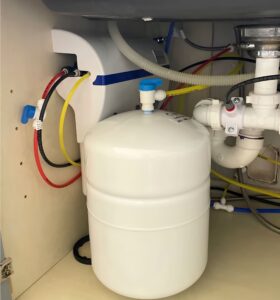
What Does a Reverse Osmosis (RO) System Do?
A reverse osmosis system reduces many dissolved substances in drinking water by passing water through a semipermeable membrane. Our residential reverse osmosis systems combine that membrane with other filtration stages, such as carbon filters.
Depending on its design and verified performance, an RO system can reduce dissolved salts and specific contaminants. Our A.O. Smith reverse osmosis system is NSF certified. Carbon stage filters can also help address chlorine-related taste and odor.
For homeowners, that can mean water they prefer for drinking, cooking, coffee, and tea. A compatible refrigerator connection may also supply treated water for ice.
Always check the specific system’s certifications and reduction claims. The term “RO” alone does not establish that a system reduces every contaminant you are concerned about.
When Does Having Both Make Sense?
Both systems may make sense when you have hardness-related problems throughout the home, want appliance and plumbing longevity, and want purified drinking water.
For example, you might notice crusty buildup around your faucets or on your glass shower doors, and you may be buying bottled water because you dislike the taste of your fridge water or tap water. In that situation:
- A softener addresses hardness in water supplied to the home’s connected fixtures.
- An RO system provides additional treatment at the drinking water tap.
Choosing both should follow an assessment of your water and your priorities. Owning one system does not automatically mean you need the second.
Can You Use Reverse Osmosis Without a Water Softener?
Yes. An RO system can operate without a water softener when the incoming water meets the manufacturer’s requirements.
The right setup depends on water hardness, pressure, water chemistry, and the system’s specifications. Pretreatment may be recommended for some installations, so have the installer check those requirements before choosing equipment.
If your main goal is improving drinking water, an RO system, or another appropriately selected filter, may be enough.
Can a Water Softener Improve Drinking Water Taste?
A softener may change how water tastes, but it is not designed to resolve every taste or odor concern.
Softening does not perform the same job as carbon filtration or reverse osmosis, and softened water isn’t designed to replace a drinking water treatment system. Match the treatment to the problem you want to solve.
How Do You Know Which System Your Home Needs?
Start with your water results and the problems you actually notice. A useful assessment considers:
- Your home’s measured water hardness
- Taste, odor, scale, and cleaning concerns
- Any specific concerns that require laboratory testing
- Installation requirements and ongoing maintenance costs
A basic in-home test can help evaluate hardness and other practical water characteristics. It does not establish that water is free of all contaminants. Specific contaminant questions may require targeted laboratory testing. The CDC recommends choosing treatment based on what is present in your water and what you want to remove.
Frequently Asked Questions
Do I need both a water softener and reverse osmosis?
Not necessarily. A softener treats hardness throughout the home, and RO treats drinking and cooking water at one tap. You may benefit from both if you have hard water problems and want improved drinking water, but the right choice depends on your water test and your goals.
Can reverse osmosis soften water?
A typical kitchen RO system does not soften water throughout your home. It treats water at one location, usually the kitchen sink.
Is a water softener the same as a water filter?
No. A softener reduces hardness minerals like calcium and magnesium. It does not remove every substance in your water and is not a complete drinking water filtration system.
Can I install reverse osmosis without a water softener?
Yes, when the incoming water meets the manufacturer’s requirements. Hardness, pressure, and water chemistry all matter, so have an installer check before you choose equipment.
How do I know if my Arizona home needs a water softener or RO?
Start with a water test and a list of the problems you notice, such as scale on fixtures, soap that won’t lather, or tap water you don’t enjoy drinking.
Find Out What Your Water Needs
You do not have to guess between a water softener, an RO system, or both.
Schedule a free, no-obligation in-home water test with Clean H2O PRO'S. We’ll review your water’s hardness, test your drinking water, talk through what you’re noticing around your home, and explain treatment options that fit your goals. If your concerns call for more detailed analysis, we can also discuss our paid laboratory testing options.
Book Your Free Water Test → or call 480-486-8018.